
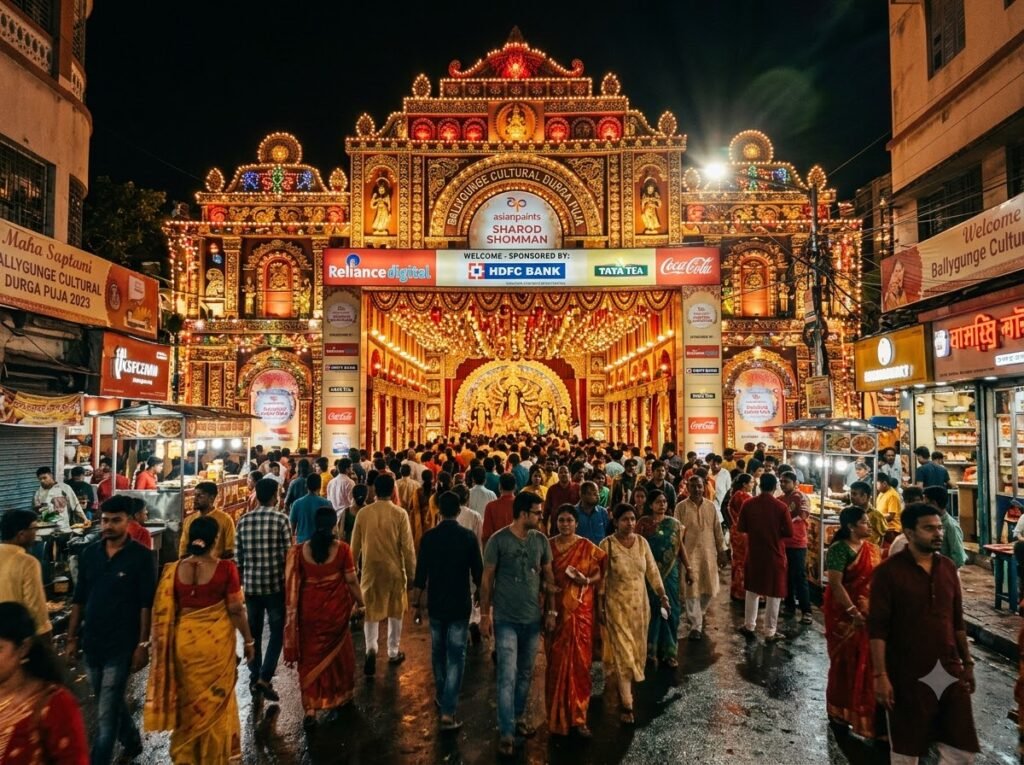
What Is Durga Puja Sponsorship?
Durga Puja sponsorship in Kolkata refers to the financial or in-kind support that brands, businesses, and local enterprises provide to Puja committees in exchange for visibility during the festival. This exchange typically includes branding on pandal entrances, banners, stage backdrops, gift hampers, digital promotions, and on-ground activation booths.
With Kolkata’s Durga Puja now recognized by UNESCO as Intangible Cultural Heritage, the festival attracts footfall in the tens of millions across the city over five to seven days. For brands, this represents one of the densest, most concentrated consumer touchpoints available anywhere in India during a single week making sponsorship a high-leverage marketing investment rather than a charitable afterthought.
Why Durga Puja Sponsorship Matters for Brands ?
1. Unmatched Footfall and Dwell Time
Unlike a billboard or a 30-second TV spot, a pandal keeps visitors engaged for 15–45 minutes on average, walking past sponsor branding multiple times — at the queue, the entrance, and inside the pandal itself.
2. Hyperlocal and Community Trust
Sponsoring a neighborhood’s beloved Puja builds goodwill that traditional advertising cannot buy. Local residents associate the brand with festivity, generosity, and community participation — a trust dividend that lingers well beyond the five days.
3. Multi-Channel Exposure
A single sponsorship deal can span print banners, LED screens, social media collaborations, influencer pandal-hopping content, and even television coverage for the larger “theme pujas” of North and South Kolkata.
4. Cost-Effective Reach vs. Traditional Media
Compared to prime-time TV ad rates during the festive season, mid-tier pandal sponsorship in Kolkata often delivers a lower cost-per-impression, especially for FMCG, real estate, jewellery, apparel, and fintech brands targeting Bengali households.
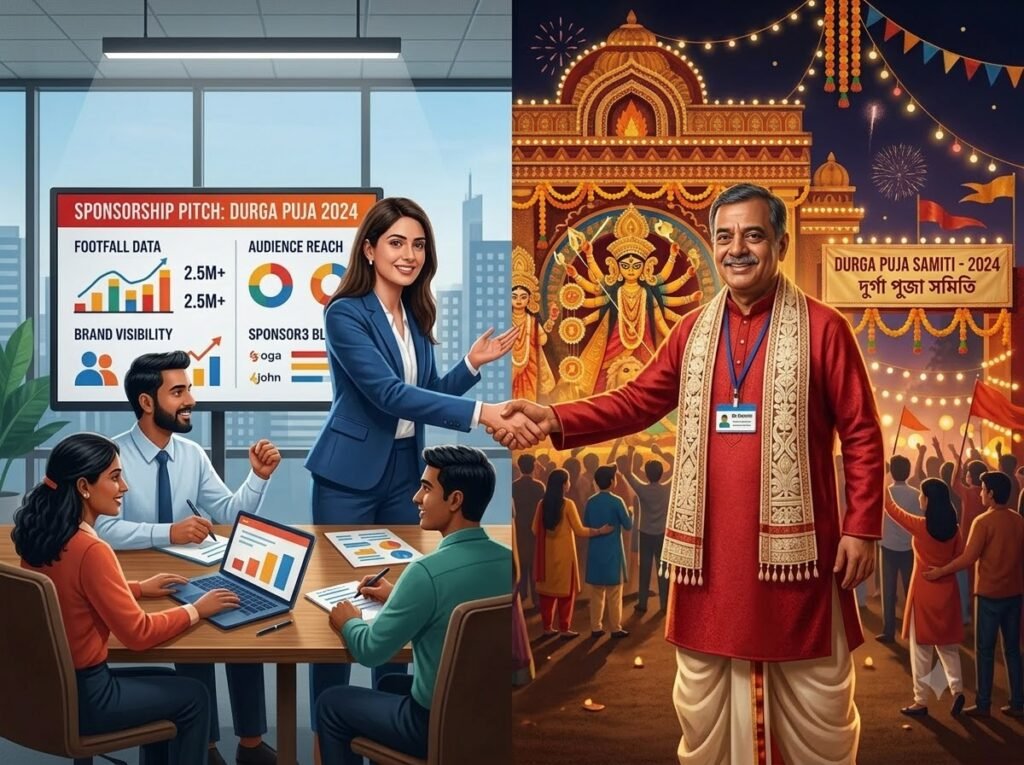
Types of Durga Puja Sponsorship Packages
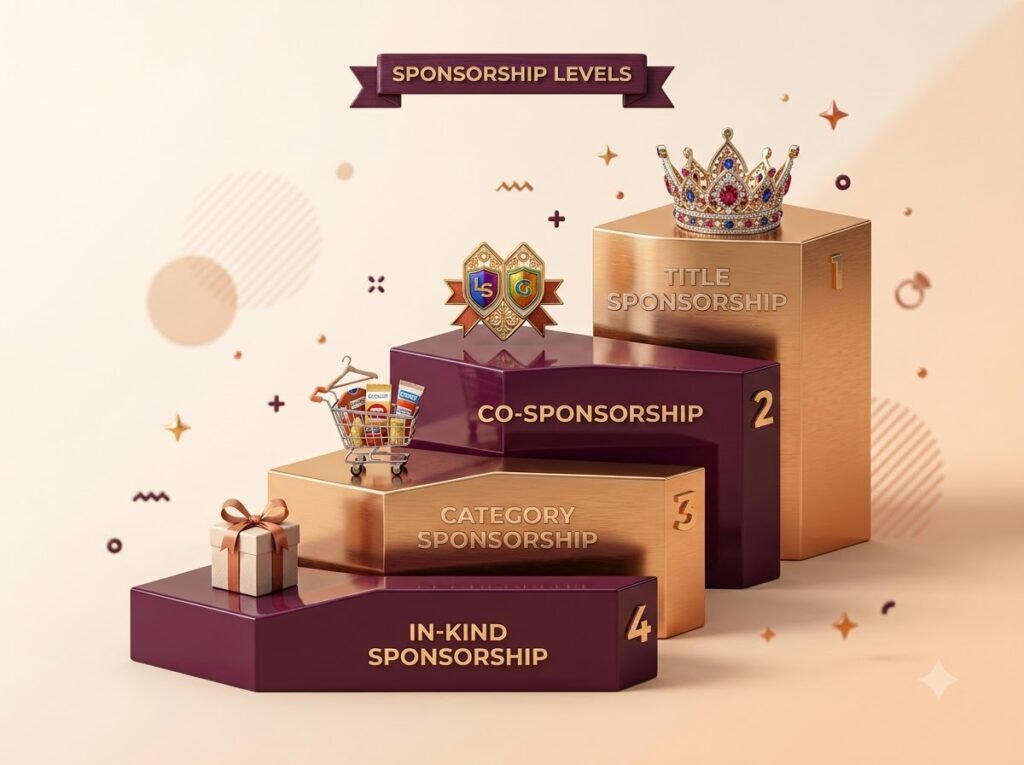
Puja committees typically structure sponsorship into tiers. While exact numbers vary by locality and pandal prestige, the common structure looks like this:
Title Sponsorship
The highest tier — brand name attached to the Puja itself (e.g., “[Brand] presents [Puja Name]”). Includes prime banner placement, stage mentions, and often naming rights on the theme.
Co-Sponsorship / Powered-By Sponsorship
Second-tier visibility — logo placement on all major collaterals, but without naming rights.
Category Sponsorship
Exclusive rights within a product category (e.g., only one telecom brand, one bank, one beverage brand). Popular among FMCG and BFSI sectors.
In-Kind Sponsorship
Instead of cash, brands provide products, services, or infrastructure — lighting, sound systems, security barricades, drinking water stations, or gift hampers for volunteers.
Digital/Social Media Sponsorship
Focused purely on content collaboration — reels, influencer pandal tours, live-streamed Anjali (prayer) sessions, and geo-tagged social contests.
How Puja Committees Can Attract Sponsors ?
1. Build a Sponsorship Deck with Data
Include past footfall estimates, media coverage, social media reach, neighborhood demographics, and photos of previous years’ pandal and crowd. Brands respond to numbers, not sentiment alone.
2. Approach Category-Relevant Brands First
A committee near a business district should target BFSI and real estate brands; a residential family-heavy locality suits FMCG, apparel, and edtech brands.
3. Offer Tiered, Transparent Pricing
Clearly listed packages (Title / Co-sponsor / Category / In-kind) with defined deliverables build brand trust and speed up decision-making for corporate marketing teams.
4. Leverage Local Business Associations
Many committees successfully secure funding through local trade bodies, RWAs (Resident Welfare Associations), and Kolkata-based chambers of commerce that maintain annual CSR/sponsorship budgets.
5. Start Early — Ideally by June-July
Corporate marketing budgets for the festive season are typically finalized 3–4 months in advance. Committees that pitch by early summer secure better rates and premium tiers.
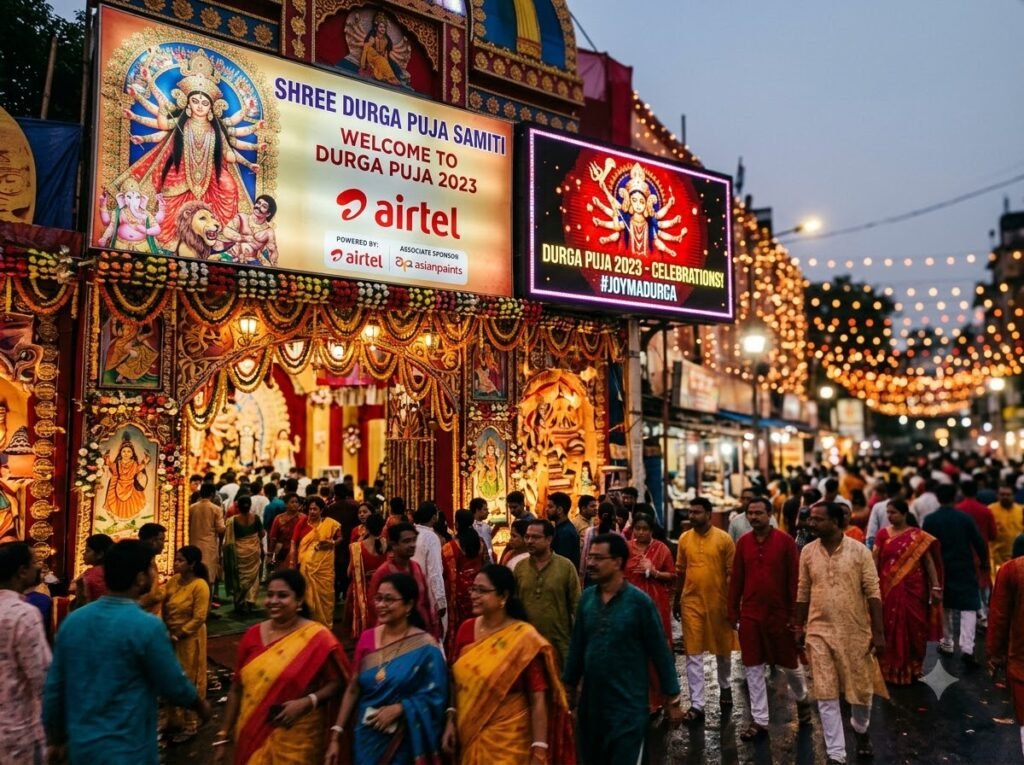
How Brands Can Choose the Right Puja to Sponsor
1. Match Audience Demographics
North Kolkata pandals (like those in Bagbazar or Shyambazar) tend to attract heritage-focused, older, and traditional crowds, while South Kolkata’s theme pujas (Ekdalia Evergreen, Mudiali, Deshapriya Park) draw younger, design-conscious visitors and heavier media coverage.
2. Evaluate Past Media Reach
Ask committees for previous years’ newspaper coverage, TV segments, and social engagement numbers — not just estimated footfall.
3. Consider Theme Puja vs. Traditional Puja
Theme pujas (with elaborate art installations) attract influencers, photographers, and out-of-city tourists — ideal for brands seeking viral, shareable content. Traditional pujas offer deeper community trust — ideal for brands prioritizing local loyalty.
4. Budget for Activation, Not Just Branding
The most effective sponsorships pair static branding with an on-ground activation — a selfie booth, a sampling counter, or a mini contest turning passive visibility into active engagement.
Common Mistakes to Avoid
- Committees: Underpricing sponsorship out of desperation, failing to formalize agreements in writing, or over-promising visibility they can’t deliver.
- Brands: Choosing a pandal purely by prestige without checking audience fit, or treating sponsorship as a one-off transaction instead of a multi-year relationship that compounds brand recall.
FAQ: Durga Puja Sponsorship in Kolkata
Costs vary widely — from a few thousand rupees for in-kind support to a small local puja, up to several lakhs (or more) for title sponsorship of a major North or South Kolkata theme puja. Pricing depends on the pandal’s prestige, footfall, and media coverage.
Ideally by June or July, since committees finalize sponsors before Mahalaya (the ritual marking the start of the festive countdown), and premium slots get booked early.
Banner and hoarding placement, stage announcements, logo inclusion on print/digital materials, booth space for activations, and social media mentions.
Sponsorship is generally treated as a marketing/promotional expense rather than a donation, so it may be eligible for business expense deductions — but brands should confirm applicable tax treatment with a chartered accountant, as rules depend on documentation and structure of the agreement.
FMCG, real estate, jewellery, apparel, banking/fintech, food & beverage, and telecom brands see the strongest ROI due to high relevance to festive shopping and gifting behavior.
Yes — in-kind sponsorship (offering products, services, or volunteer support) is a low-cost entry point that still builds local goodwill and brand visibility.
Hi, this is a comment.
To get started with moderating, editing, and deleting comments, please visit the Comments screen in the dashboard.
Commenter avatars come from Gravatar.